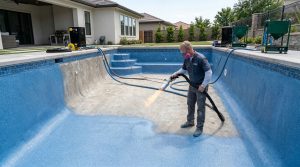
Picture this: it’s early April in Alpharetta, Georgia. After months of freezing nights and a brutal February ice storm, you peel back your pool cover to find spiderweb cracks crawling across the plaster, patches of chalky white discoloration, and rough, pitted surfaces that weren’t there last fall. Sound familiar?
You’re not alone. Across Atlanta, Marietta, Cumming, and the surrounding North Georgia region, pool owners face the same seasonal battle: extreme weather quietly and sometimes not so quietly attacking pool surfaces from the inside out. The good news? There’s a smarter, longer-lasting solution that leading pool professionals are recommending today: EcoFinish pool coatings, available through Paradyme Coatings, Georgia’s trusted pool resurfacing specialists.
In this guide, we break down exactly how weather damages your pool surface, what warning signs to watch for, and why EcoFinish represents the gold standard in pool resurfacing technology.
The 5 Biggest Weather Threats to Your Pool Surface in Georgia
Georgia’s climate is uniquely punishing for pool surfaces. From frigid January nights to blistering July afternoons, here’s what your pool is up against:
1. Freeze-Thaw Cycles
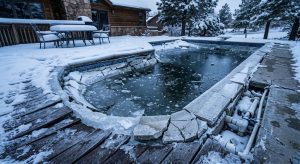
Even in Atlanta’s relatively mild winters, temperatures can drop below freezing 30–40 nights per year. Water trapped in tiny surface pores expands by roughly 9% when it freezes. Do this repeatedly over a single season, and even a structurally sound plaster surface begins to crack, spall, and pit. This process called freeze-thaw degradation is one of the leading causes of premature pool resurfacing needs in North Georgia.
2. UV Radiation and Summer Heat
Georgia summers regularly push 95°F+, and pool surfaces bake under intense UV exposure for months at a stretch. Traditional plaster and paint coatings break down under UV radiation, causing fading, chalking, and surface erosion. Studies from the Pool & Hot Tub Alliance indicate that UV exposure is one of the top accelerants of pool surface aging shortening lifespans by years.
3. Heavy Rain, Flooding, and Groundwater Pressure
The Atlanta metro area averages over 50 inches of rainfall per year. When heavy rains saturate the surrounding soil, hydrostatic pressure builds beneath your pool shell. If your surface has existing micro-cracks, that water works its way in causing blistering, delamination, and structural cracking.
4. Storm Debris and Chemical Imbalances
Storms deposit organic debris leaves, pine needles, pollen, dirt that decomposes and throws off your water chemistry. Acidic water (pH below 7.2) aggressively eats away at plaster surfaces. Conversely, hard water with elevated calcium deposits scale on pool walls and floors, creating rough, staining-prone surfaces.
5. Drought and Water Level Fluctuations
Georgia experiences periodic droughts that can force pool water levels to drop or lead homeowners to drain pools entirely. Exposure to air and direct sun when a pool is partially drained accelerates surface oxidation and can cause plaster to “check crack” from the thermal shock of rapid drying.
6 Warning Signs Your Pool Surface Needs Attention
Don’t wait until you’re dealing with structural failure. Watch for these early indicators:
-
Rough, sandpaper-like texture underfoot a sign of plaster erosion
-
Visible cracks, chips, or spalling on floors or walls
-
Persistent staining that won’t respond to brushing or chemical treatment
-
Frequent algae blooms despite proper chemical maintenance (rough surfaces harbor algae)
-
Noticeable water loss beyond normal evaporation rates
-
Discoloration, chalky white areas, or mottled finish
If you’re noticing two or more of these signs, it’s time to call the experts. Contact Paradyme Coatings at (678) 897-3456 for a free consultation don’t let small surface issues become expensive structural repairs.
What Is EcoFinish And Why Is It the Superior Pool Resurfacing Choice?
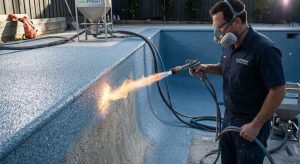
EcoFinish is a revolutionary thermoplastic pool coating system originally developed in Europe and now widely regarded as one of the most durable, environmentally responsible pool surfaces on the market. Unlike traditional plaster or fiberglass coatings, EcoFinish is spray-applied as a molten polymer that bonds directly to the pool shell at the molecular level creating an extraordinarily dense, non-porous surface.
EcoFinish vs. Traditional Pool Resurfacing: A Quick Comparison
|
Feature
|
Traditional Plaster
|
Paint/Epoxy Coating
|
EcoFinish
|
|
Lifespan
|
7–12 years
|
3–5 years
|
15–20+ years
|
|
UV Resistance
|
Moderate
|
Low
|
Excellent
|
|
Freeze-Thaw Resistance
|
Low
|
Low
|
Excellent
|
|
Chemical Resistance
|
Moderate
|
Low–Moderate
|
High
|
|
Algae Resistance
|
Low (porous)
|
Moderate
|
High (non-porous)
|
|
Eco-Friendly
|
No
|
No
|
Yes (no VOCs)
|
|
Color Options
|
Limited
|
Moderate
|
20+ vibrant colors
|
How EcoFinish Specifically Defeats Extreme Weather
Because EcoFinish has virtually zero porosity, water cannot penetrate the surface during winter. There’s nothing to freeze, expand, and crack.
EcoFinish’s polymer chemistry includes UV stabilizers built into the molecular structure — meaning colors stay vibrant and surfaces stay smooth even after years of Georgia sun.
Unlike rigid plaster, EcoFinish has a slight flex that accommodates the natural expansion and contraction of pool shells in temperature extremes.
Without microscopic pores for algae spores and debris to cling to, EcoFinish pools are dramatically easier to maintain and far less prone to organic staining after storms.
EcoFinish withstands a broader range of pH and chemical fluctuations than plaster — meaning the post-storm water chemistry battles cause far less surface damage.
Serving Atlanta, Alpharetta, Marietta, Cumming, and North Georgia
Paradyme Coatings proudly provides professional pool resurfacing services including EcoFinish applications throughout the greater Atlanta area and surrounding communities, including:
-
Atlanta, GA
-
Alpharetta, GA
-
Marietta, GA
-
Cumming, GA
-
Roswell, GA
-
Johns Creek, GA
-
Milton, GA
-
Peachtree City, GA
-
Woodstock, GA
-
Canton, GA
-
Duluth, GA
Not sure if we serve your area? Call us at (678) 897-3456 and we’ll be happy to help.
Frequently Asked Questions About Pool Resurfacing and EcoFinish
How long does EcoFinish last compared to traditional plaster?
EcoFinish typically lasts 15–20+ years with proper maintenance, compared to 7–12 years for standard plaster. Its non-porous surface and UV-stable polymers make it significantly more resilient in climates with wide temperature swings like Georgia.
Is EcoFinish safe for swimmers and pets?
Yes. EcoFinish contains no volatile organic compounds (VOCs) and meets all applicable safety standards. Once cured, the surface is completely inert and safe for swimmers of all ages and household pets.
How long does a pool resurfacing project take?
A typical EcoFinish application by Paradyme Coatings takes 2–4 days depending on pool size and surface preparation requirements. We work to minimize your pool downtime as much as possible.
How much does pool resurfacing with EcoFinish cost?
Pricing varies based on pool size, existing surface condition, and finish selection. Paradyme Coatings offers free on-site consultations and competitive, transparent quotes. Call (678) 897-3456 to schedule yours today.
Can EcoFinish be applied over existing plaster?
In most cases, yes EcoFinish can be applied over properly prepared existing surfaces. Our team will assess your pool’s current condition during your free consultation to determine the best approach.
5 Steps to Protect Your Pool Surface This Season
Whether you’re ready to resurface or extending the life of your current pool surface, follow these best practices:
-
Maintain balanced water chemistry year-round, especially pH (7.4–7.6) and alkalinity (80–120 ppm).
-
Install a quality winter cover and keep water at the appropriate level during cold months.
-
Inspect your pool surface each spring for new cracks, chips, or discoloration.
-
Brush walls and floors weekly to prevent organic buildup in surface texture.
-
Consult a professional pool resurfacing specialist when surface issues first appear catching problems early dramatically reduces repair costs.
Conclusion: Don’t Let Georgia Weather Win the Battle for Your Pool
Your pool is one of your home’s most valuable assets and Georgia’s extreme weather is one of its most relentless adversaries. Freeze-thaw cycles, blistering UV radiation, heavy rains, and post-storm water chemistry swings all work to erode traditional pool surfaces year after year.
EcoFinish changes that equation. With superior UV resistance, a non-porous surface that defies freeze-thaw damage, and a lifespan that puts traditional plaster to shame, it represents the smartest long-term investment you can make in your pool.
Paradyme Coatings has helped hundreds of Georgia homeowners make the switch and the results speak for themselves. We’re certified EcoFinish applicators with deep local expertise and a commitment to delivering a pool surface that performs beautifully season after season.
Ready to transform your pool? Don’t wait for more damage to stack up.
Call Paradyme Coatings today at (678) 897-3456 to schedule your FREE on-site consultation. Or visit our website to learn more about our pool resurfacing services and EcoFinish options.
Serving Atlanta, Alpharetta, Marietta, Cumming, Roswell, and the entire North Georgia region.